Problem & Context
What Needed to Change.
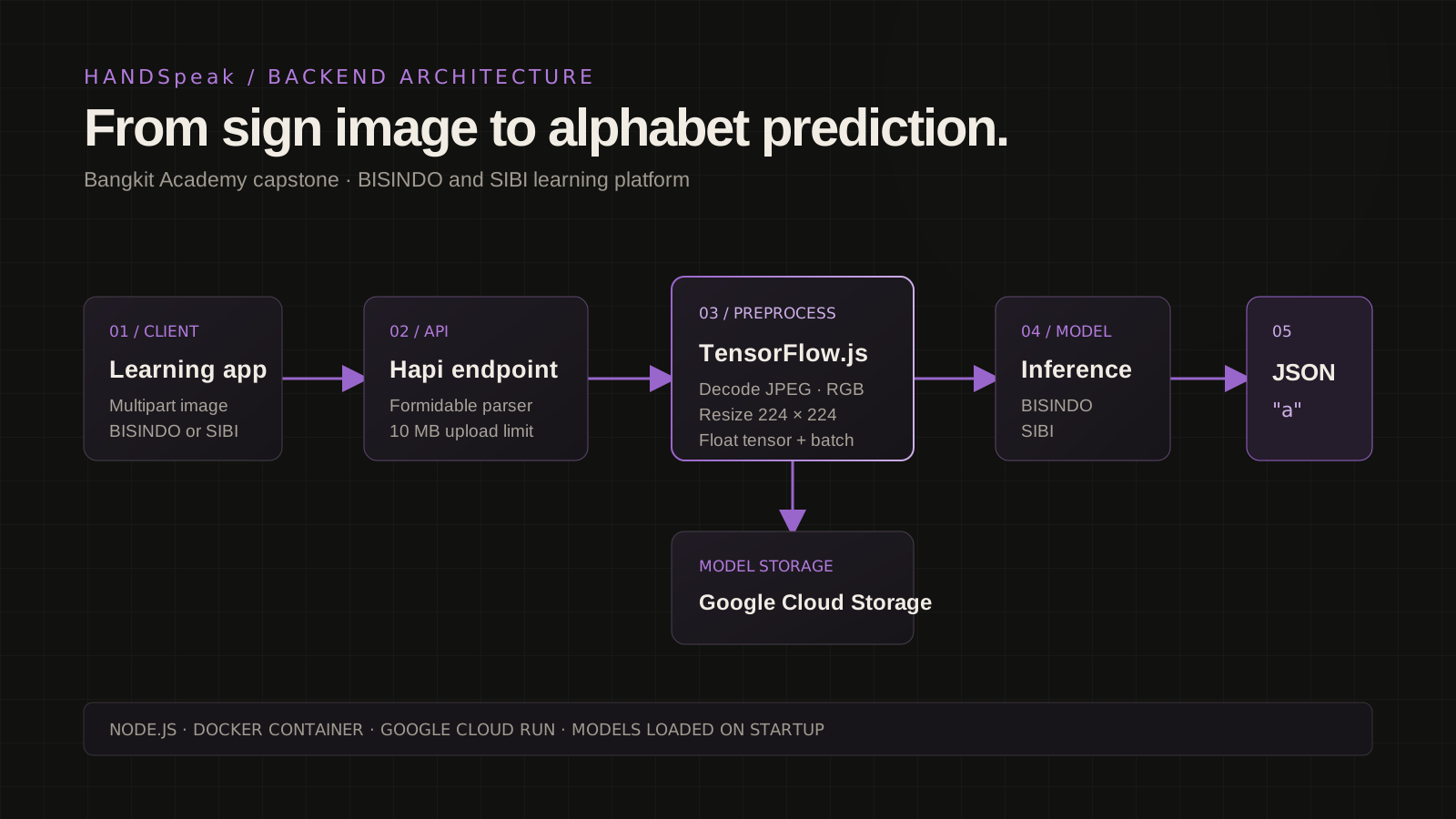
HandSpeak required a backend capable of accepting sign-language images and returning alphabet predictions from separate BISINDO and SIBI models.
The learning platform was built as a Bangkit Academy team capstone. Machine-learning teammates produced the classification models, while the backend work covered API development, model integration, Docker packaging, and Google Cloud deployment.
Constraints & Tradeoffs
The Shape of the Decision Space.
Constraints
- The API needed to support separate BISINDO and SIBI prediction flows.
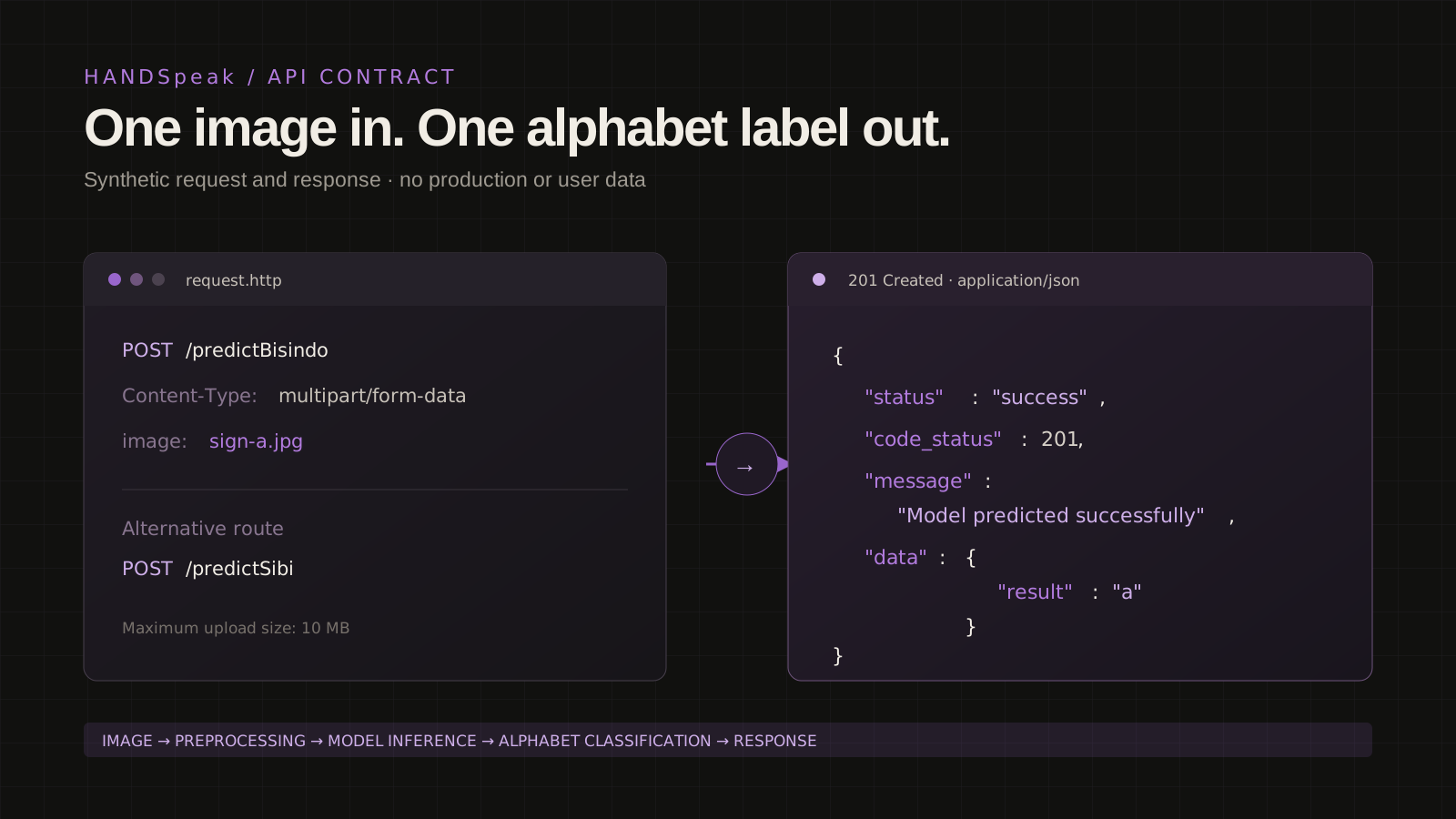
- Image uploads used multipart form data with a maximum payload size of 10 MB.
- Uploaded JPEG images had to be decoded into three-channel, 224 × 224 tensors expected by the models.
- Both models were loaded from Google Cloud Storage during application startup.
Tradeoffs
- Separate endpoints make model selection explicit but duplicate some request-handler logic.
- Synchronous inference keeps the API simple but makes request latency depend on model execution.
- Preloading models reduces per-request setup but increases startup time and memory usage.
- Flexible multipart field handling simplifies client integration but provides a weaker upload contract.
Architecture
A Deliberately Legible System.
- 01
Learning Client
The learning interface submits a BISINDO or SIBI sign image as multipart form data.
- 02
Hapi REST Endpoint
A dedicated prediction route selects the corresponding sign-language workflow.
- 03
Multipart Parser
Formidable extracts the uploaded file while the server enforces the 10 MB payload limit.
- 04
Image Preprocessing
TensorFlow.js decodes the JPEG, resizes it to 224 × 224, adds a batch dimension, and converts it to a float tensor.
- 05
Model Inference
The preloaded BISINDO or SIBI graph model processes the prepared image tensor.
- 06
Alphabet Classification
The highest prediction score is mapped to its corresponding lowercase alphabet label.
- 07
JSON Response
The containerized API returns the predicted letter or a structured error response.
Screens & States
The Interface in Context.
Results
What the System Delivers.
- Two REST endpoints for BISINDO and SIBI image prediction.
- Consistent JPEG decoding, resizing, tensor creation, and alphabet-label mapping.
- Upload-size enforcement and structured client and server error responses.
- Docker packaging configured for deployment on Google Cloud Run.
Lessons
What I Would Carry Forward.
- Model-serving APIs need explicit agreements on input format, tensor shape, and class ordering.
- Separating model loading, inference, and HTTP handling makes the backend easier to maintain.
- Production inference services should add MIME validation, tensor cleanup, restricted CORS, and automated tests.
- Loading models at startup trades longer cold starts for simpler and faster prediction requests.